Note: This is a revised version of the original article. The core message is the same, it has just been updated for clarity.
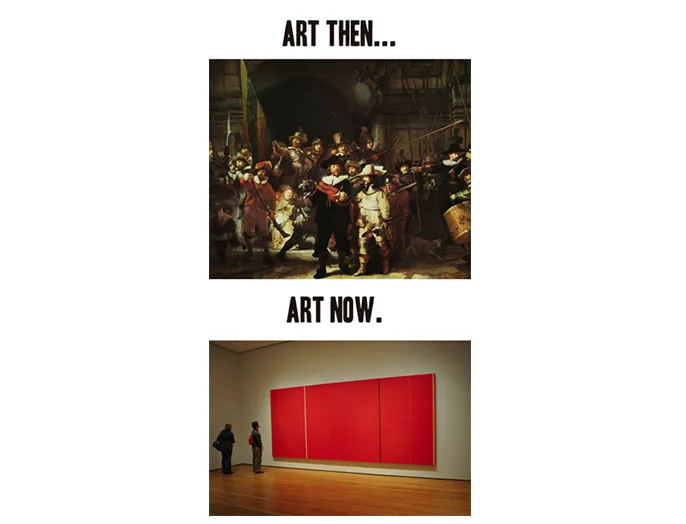
This meme prompts a comparison between traditional art from the Baroque period and contemporary art. However, it seems to embed a judgmental stance, suggesting that art today is lazy and oversimplified compared to its historical counterparts. This interpretation is common with these sorts of memes, which often aim to cleverly make a point but can inadvertently perpetuate misconceptions.
Technically, it’s true that artists of the past displayed a remarkable skill set to create works of art, while many modern artists may not require the same level of technical proficiency. However, this observation overlooks the fact that art served different purposes in different time periods. It’s akin to comparing “apples to oranges.”
In the past, before the advent of technologies like photography, the ability to create realistic art was highly valued and required a specific skill set. Today, with advancements in technology and the emergence of various art forms, including photography, artists explore different avenues of creativity. This has led to the development of abstract art, which seeks to evoke emotions in ways distinct from realistic art. Therefore, comparing the two techniques and implying that one is inherently superior due to the skill involved is shortsighted.
It’s essential to acknowledge and respect the skill set required to create photorealistic art without devaluing other forms of artistic expression. Rather than making comparisons that undermine the merit of contemporary art, we should strive to appreciate art history in its proper context. This entails engaging with different artistic styles and movements critically and understanding the societal, cultural, and technological factors that have shaped their development.
In conclusion, while the image may seem to highlight differences between past and present art, it ultimately falls short in fostering a nuanced understanding of artistic evolution. By reframing the conversation around appreciation rather than judgment, we can cultivate a deeper appreciation for the diversity and richness of artistic expression across different eras.