Throughout my experience working on various projects for different organizations, I’ve noticed a common struggle: projects often hit roadblocks and end up taking much longer than anticipated. It got me wondering why things felt like such a grind.
I tried improving workflows and organizational plans, which helped to some extent, but things still didn’t feel quite right. That’s when it hit me:
“The mindset individuals bring to a project significantly influences its efficiency and smooth execution”
This realization led me to develop a mental framework for understanding workflow mindsets in both myself and others. Viewing things through this lens has not only helped me work more efficiently with others but has kept projects from dragging on endlessly.
Workflow Mindset
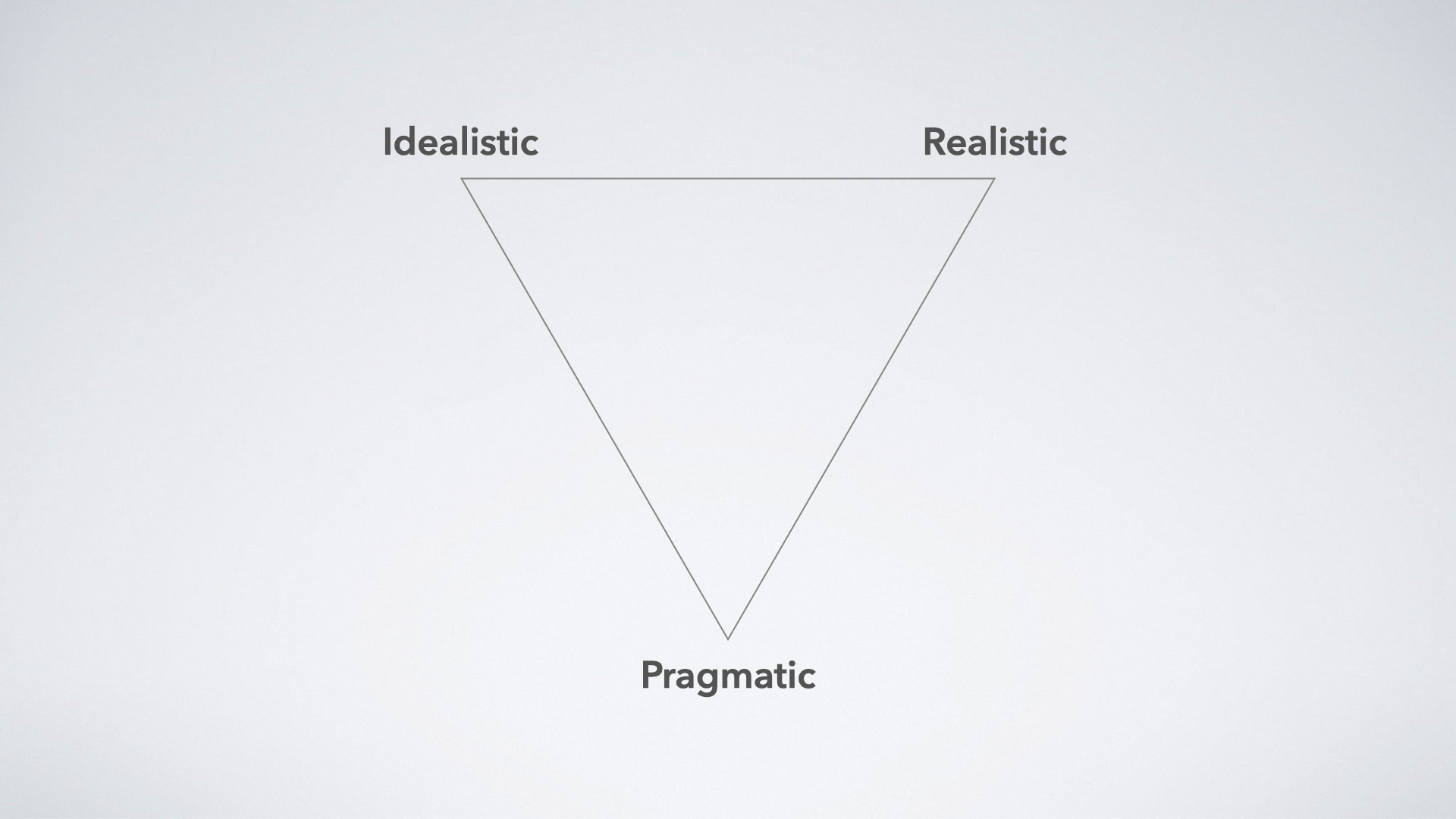
I believe people tend to lean in one of three directions when working on a project, influenced by factors like expertise level, cultural trends, project mood, and personal dynamics. These mindsets are valuable in their own right, but the key is understanding how they complement each other for a balanced project mindset.
Idealistic Mindset
The Idealistic Mindset is all about brainstorming and dreaming. It’s the mindset that says, “What if we…?” This mindset thrives on generating new ideas and pushing boundaries to unlock a project’s full potential. The sky is the limit, and all ideas are considered while in this mode.
Realistic Mindset
In contrast, the Realistic Mindset focuses on deadlines, technical details, and logistical feasibility. It’s the voice that asks, “How are we going to get this done? What’s our budget? Are we doing this properly?”
Pragmatic Mindset
The Pragmatic Mindset is all about action. This mindset focuses on getting things done, like, NOW. The mantra is: “Tell me what you want, and I’ll figure out how to make it happen.” Resourcefulness and finding quick solutions using tools like search engines, forums, and AI is valued above all else.
Clash of the Mindsets
While each mindset brings its own benefits, they can also clash with each other:
- An Idealist might have a grand vision but struggle with deadlines and the drive to start projects.
- A Realist might create a meticulous plan but lack creativity or ability to get things done quickly.
- A Pragmatist might get things done quickly but sacrifices thoroughness and respect for the grand vision.
Kick-Off the Project
With the Workflow Mindset framework established, here is a sample of how I have started projects with this perspective. It’s vital to ensure clear understanding and mutual respect for the other mindsets, fostering and maintaining a balanced dynamic throughout the project.
I primarily work in the design industry, but this thought process can be applicable to any project. Let’s take an example of a business that wants to build a website, sell things and build a web presence.
The first thing I do is identify the project owner’s tendency in the Workflow Mindset triangle. Then, after acknowledging the details from the primary mindset of the project owner, I counter by offering questions that are coming directly from the other mindsets. For example, if the owner seems to be an Idealist, then I will re-focus the conversation on Realistic and Pragmatic concerns. This brings balance to the project in general and ensures that all mindsets are honored, utilized, and respected.
Prop-Up Phrases
Explore mindset-specific sample questions and concerns for thorough understanding. These are specific to the example situation, but I suggest making a list of at least three phrases/questions for each mindset.
Idealistic
- “How much time do we have to brainstorm creative solutions for the website?”
- “Can we explore different themes to make the website more engaging?”
- “Can we try alternative media avenues to attract more visitors?”
Realistic
- “What’s our budget for this project?”
- “Which technology should we use to build the website?”
- “Do we have legal guidelines in place for our online operations?”
Pragmatic
- “Based on our resources, how should we approach building the website?”
- “Should we use a ready-made solution or build from scratch?”
- “Is it possible to start work on this right away and refine as we go?”
Let The Project Flow
As the project progresses, team members should value and respect each other’s mindsets.
An Idealist may continue to generate creative ideas but should also prioritize meeting deadlines and staying within budget:
I have more creative ideas, but the team needs to focus on getting things done properly, on time and within budget. Maybe I will mention the ideas briefly, but I can put the ideas on the back burner for the next phase of the project.
Similarly, a Realist should ensure attention to detail without stifling creativity:
I am finding a lot of picky issues that need to be corrected in this project. It is my job to point them out, but perhaps I should let the others get their work done, let them work out some creative solutions and trust things will work themselves out.
A Pragmatist should balance efficiency with thoroughness:
I hate time cards and all these meetings. I will definitely point out where I think we can streamline the process better, but I suppose keeping track of work data and taking some extra time to do things properly will ensure this project excels.
Conclusion
This framework has revolutionized the way I approach projects and life in general. In challenging situations, I often refer to this framework, and it consistently helps me see something I was missing to get to a solution quicker or understand the high-level goals of the project better. This has made me more adaptable and effective in various situations. Whether I’m designing, coding, or cooking, understanding these mindsets helps me maintain balance and empathy in interactions with others.